The Story · 11 Mott Street, one flight down
He trained at Per Se. He wanted a wok.
Erik Cheah spent three months at the highest level of American fine dining, then went his own way. Twenty years later the reason is on the table: his parents’ white curry laksa, served in a basement in Chinatown.
The internship was the dream ticket: Thomas Keller’s Per Se, shucking oysters, seasoning stocks, trailing servers through a dining room where everything whispers. When it ended, he knew what came next. “I wanted to open my own restaurant,” he said.
What he had in mind wasn’t plates with tweezers. It was his parents’ backyard in Penang, where for decades they cooked white curry laksa as hawkers and sold it to commuters — the pale coconut broth that goes orange the moment the chili rempah hits it.
Erik grew up across four states — Penang, Ipoh, Malacca, Seremban — watching the same national dishes come out of every kitchen a different way. Same name, different hands. Wok Wok holds to one set of hands: the family’s versions, unchanged in forty years. The har mee broth isn’t even theirs — it belongs to a family friend, another hawker, and they cook it the way he taught them.
“Same dish, every kitchen, its own way. We cook the version that stuck with our family — unchanged in forty years.”
Three things we don’t shortcut
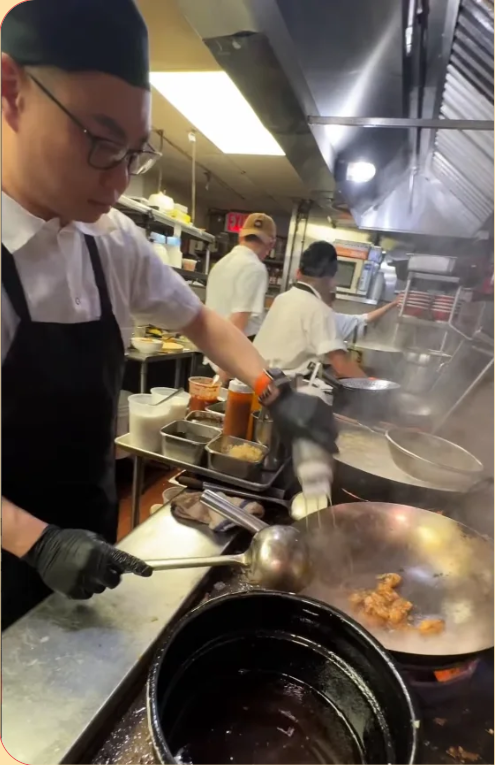
01 · Fire
The burners run loud enough that you hear the kitchen before you see it. Wok hei isn’t a flavor you add — it’s thirty seconds of a noodle meeting a flame that means it.
02 · Sambal
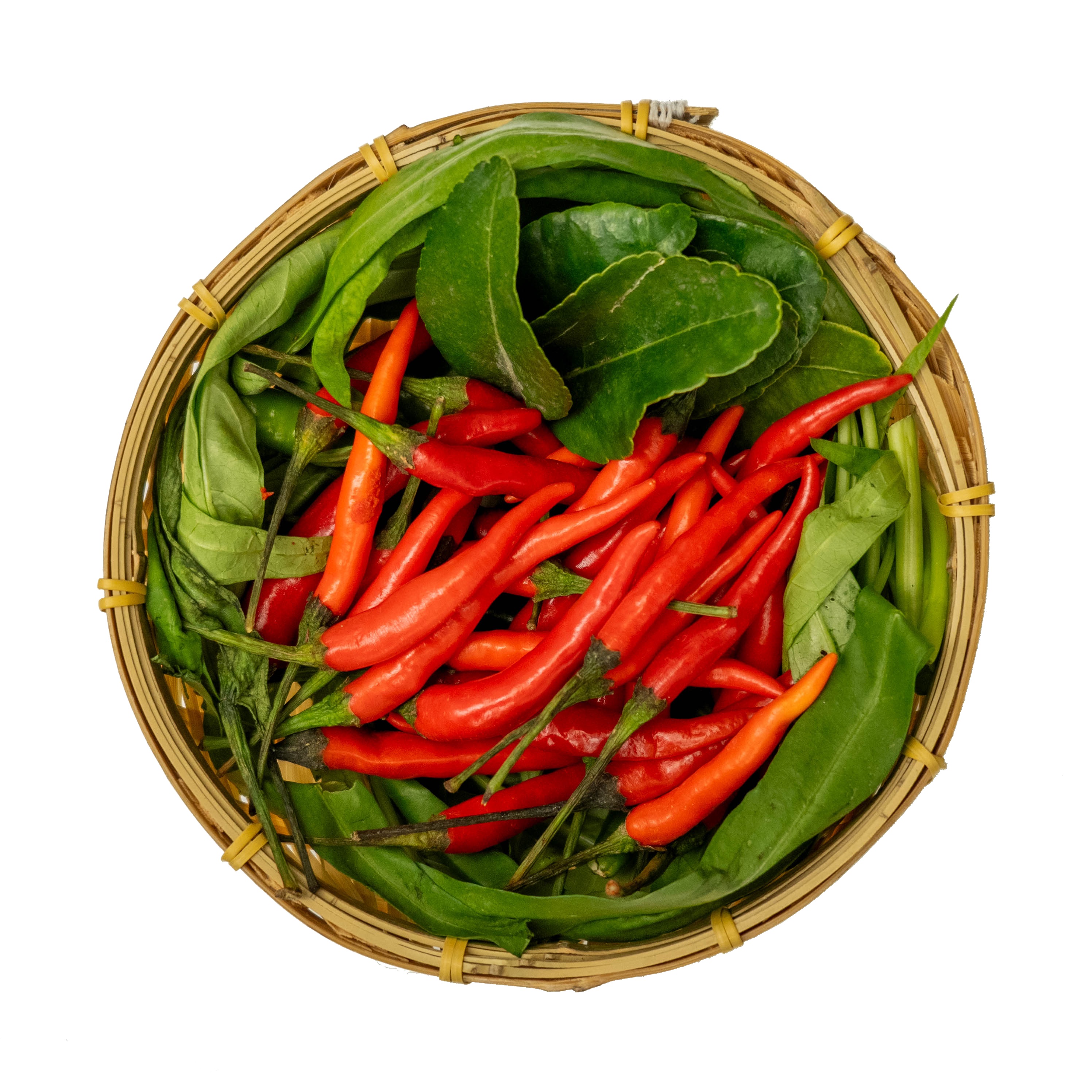
Pounded in house — chilies, belacan, shallot — until it stops being ingredients. It goes into the nasi lemak, the stone bowls, the G1. It always carries some heat; that’s the point.
03 · Broth
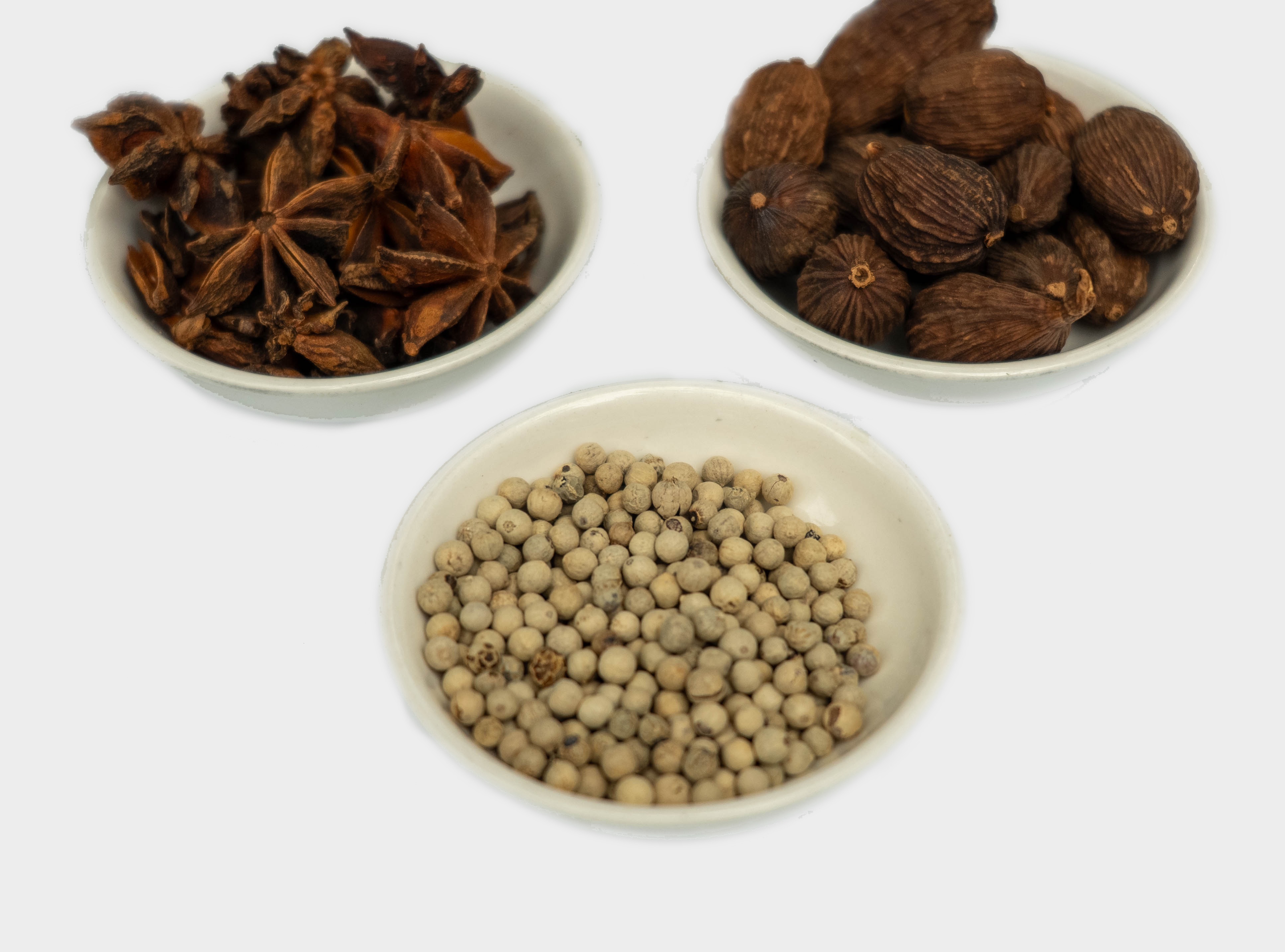
Every morning, before the door opens: prawn heads, shells and pork bones boiled down for the har mee; coconut curry built from whole spices for the laksa. No base, no paste from a tub.
The pass at 11 Mott, where every plate slows down for exactly four seconds.
Where it comes from
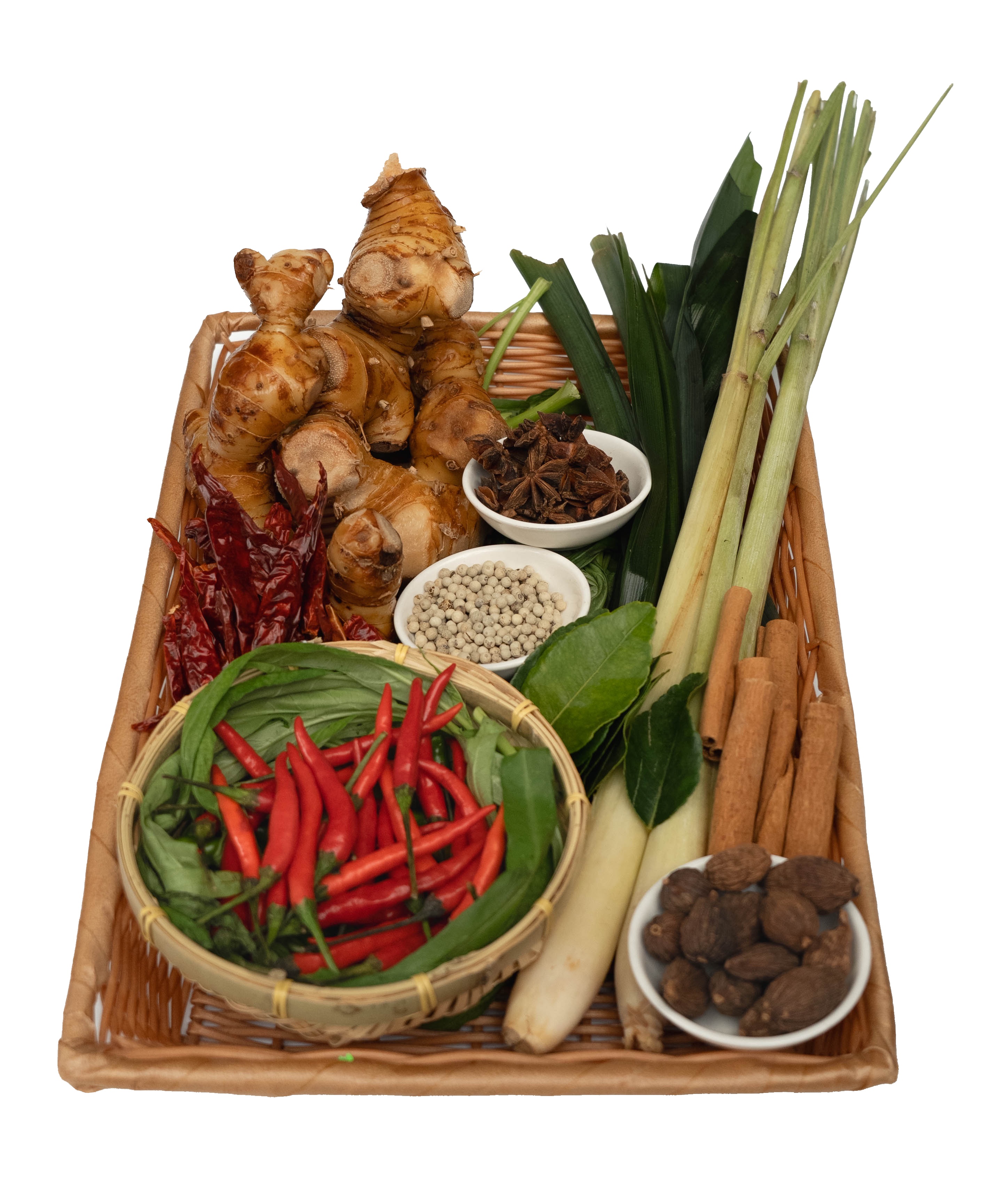
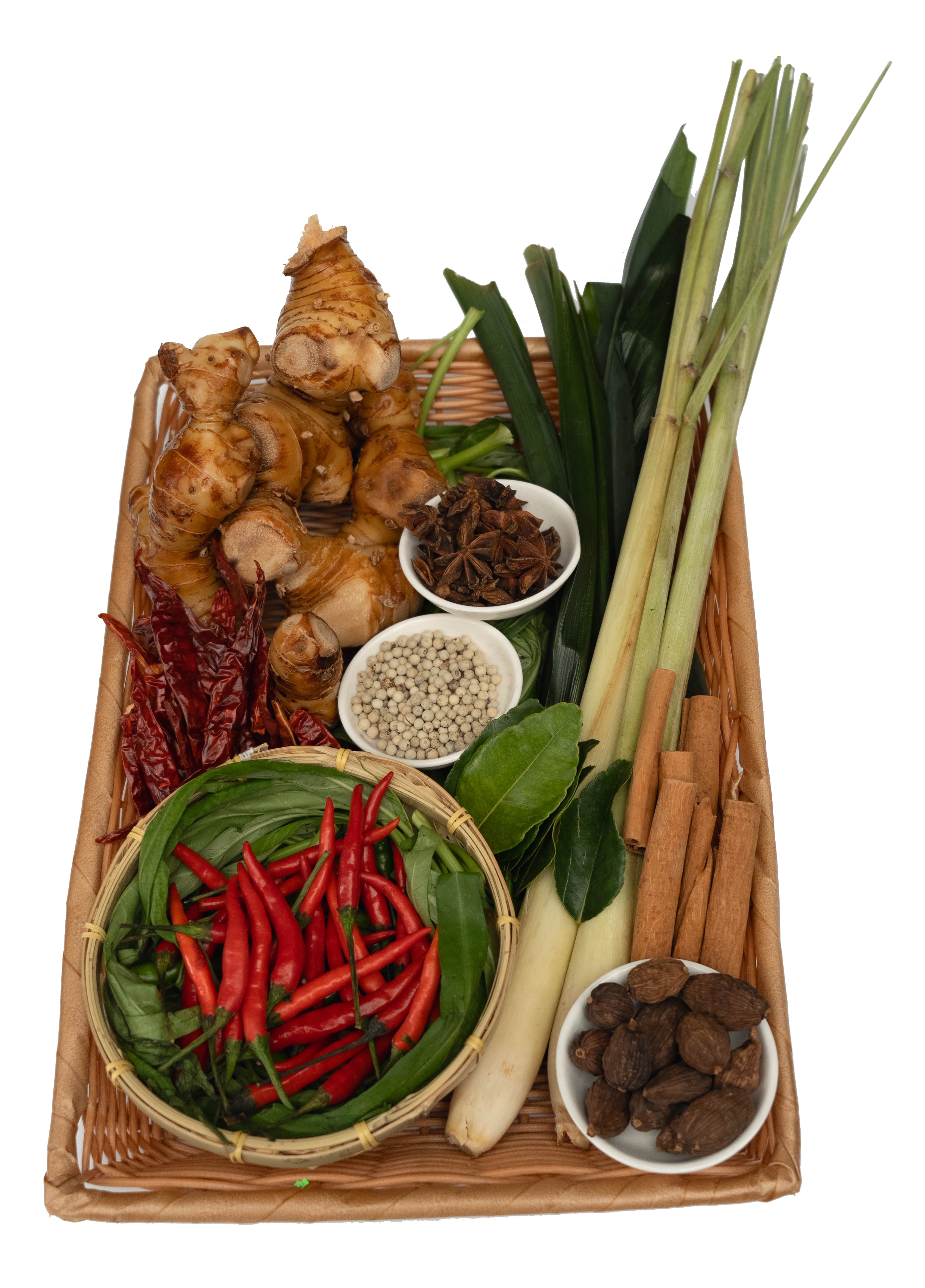
The morning run happens on foot: galangal, lemongrass, kangkung and bird’s-eye chilies from the Chinatown market stalls a block from the door; whole star anise, black cardamom and white peppercorn bought whole and ground here, not before. The belacan comes from Penang because there was never a debate about that.
Prawns arrive with heads on — the har mee needs them more than the plate does. Chickens come whole, poached whole, butchered at the counter, often while wearing a chef’s toque.
Bird’s-eye chilies, lime leaves and aromatics ready for service.
The stairs creak. The woks don’t stop. Come down.